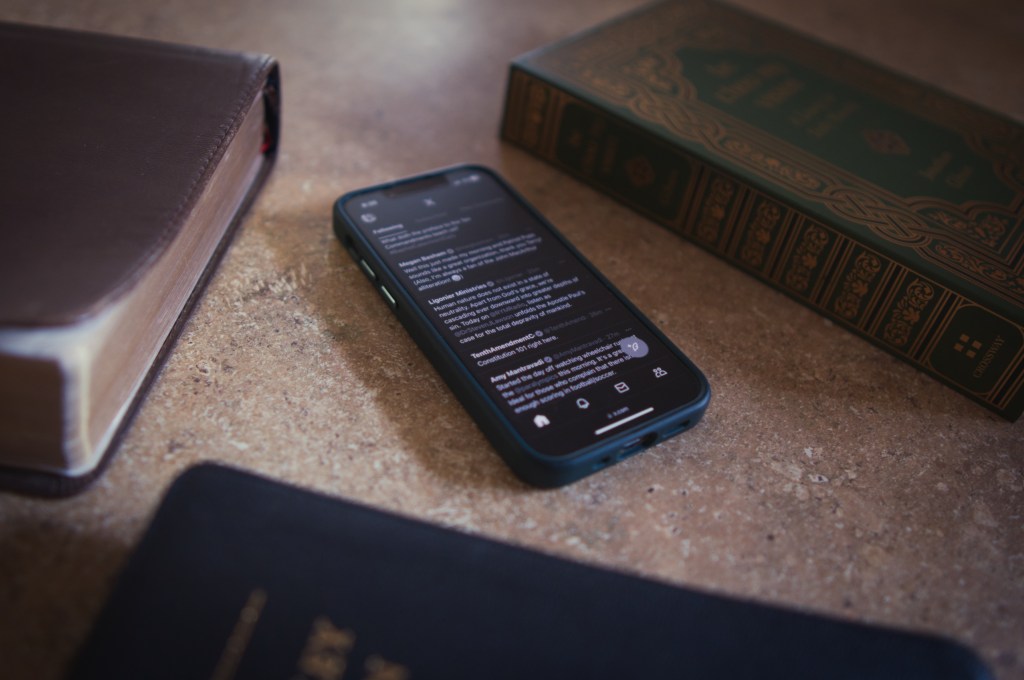
If you’re reading this, you may well be coming from X, linked to my final post from my personal account. Welcome to my digital abode; I hope you find it comfortable. While on that platform I wanted to give a final goodbye to the many who don’t know me from Adam, here I wanted to expand on those themes, written for those who either know me personally, or at least care about me enough to do the excruciating, difficult work of clicking a link. You truly are the brave few. Feel free to skip below to ‘Why Social Media is Bad for Me’ if you don’t have a lot of time, but I’m going to start with my own personal history with social media.
(Note: The timeline here reflects my own personal history with these social media platforms. To say I started using a feature on one platform at one time is not to say these features weren’t available earlier on other platforms. This is my own history, organized by my own use.)
My Social Media History
If you’re a Millennial like me, there’s a good chance that X (or Twitter) was not your first social media platform. For me and many others, that trophy belongs to good old MySpace. I remember really enjoying MySpace. While having a set layout, it gave you a lot of flexibility in the design of your page. Each page really looked unique and gave you an ability to fine-tune it precisely how you wanted. My friends and I were very much on a DC kick back then, and that was very visible in our pages. For me, it was Nightwing. For my friend Josh, it was the Joker. The fonts, the colors, the background, even the music was customizable, and our two pages could scarcely look more different! Those were very fun times. Another thing that could be customized was your top friends. Yes, there was drama in how you ranked certain friends. But what I want to focus on was that these people were, in fact, friends. At least for me and those around me, we pretty much exclusively had as friends those we knew in person. My friends list could be divided into three categories: church friends, school friends, and Tom (Of course). Conversations revolved around the things that really mattered to us: graduation, our youth group, that time we dressed up like the Joker and terrorized said youth group just before graduation. You know, the everyday stuff.
After graduating high school and beginning college, I made the move to Facebook. I wasn’t sold on it, but it seemed like very few of my college friends were on MySpace, and virtually all of them (including my soon-to-be bride) were on Facebook, so I jumped ship. Out was personalization; in was centralization. Facebook profiles looked virtually identical; only words and pictures differentiated them. But Facebook brought/popularized two other changes, both of which play critical roles both in my story, and in our modern social media environment.
First, there was the newsfeed. In MySpace, if you wanted to post, you mostly had two options: You could post on someone else’s profile in order to have a conversation with them, or you could post on your own profile, giving personal updates and further page customization. On Facebook, this was somewhat replaced with a third option: a newsfeed, an increasingly algorithmic behemoth of centralization. All the updates from your friends would be visible here. Where before you had to go to someone’s page in order to see their updates (because you knew them and cared about them as a person), now for the sake of ‘convenience’ all of your friends’ updates began to be visible in one location. You no longer needed to keep your own friends in mind; there was an app for that. This, of course, was but a baby dragon, eventually growing into the fire drake that is today’s Facebook feed, one that intentionally drowns out your friends’ posts with those of people you’ve never heard of.
Second (and I must note that this was new for me during my days on Facebook, but these were available on MySpace as well), there were groups. While some of these would be local groups, like church groups or college groups, many others were global. These were as good or bad as the people in them, not unlike the old forums of days gone by. Though certainly not new, the group functionality of Facebook skyrocketed, making those forums obsolete. But with it came the digital wall between people. Within just a few years, I went from posting on my friend Drake’s MySpace account about Batman Begins to debating (with increasing sharpness) Mormonism on Facebook with people I’ve never met. It was a raising of the stakes, and a lowering of respect. While I wasn’t exactly a jerk on Facebook, I spoke with many who were, and I certainly authored my fair share of unhelpful rhetoric. It was then, in early 2016, that I found the social media where I really thought I flourished (how wrong I was), where I called home: Twitter.
Twitter (Now X, of course) first appealed to me as an efficient condensation of everything I thought I wanted in a social media platform. Everything seemed streamlined, and with only (at the time) 140 characters, it seemed like things couldn’t get too much out of hand. After having written and read many, many seemingly article-length Facebook posts, the brevity of tweets were appealing. I started with a profile in my own name, but before long I joined a fun trend of making anonymous profiles depicting Calvinist versions of fictional characters. It felt like things had come full circle: In 2006, I had a MySpace page based on Nightwing; in 2016, I had become Calvinist Nightwing on Twitter. The time as an anon didn’t last too long, and within two years I had dropped the moniker. But rather than simply use the non-anonymous account I already had, I changed Calvinist Nightwing back into Matt Robertson, and I did so for one reason, one of the most toxic parts of Twitter/X (and social media as a whole) in my opinion: follower counts. My old account had somewhere around 40 followers on there, but by the time I dropped the Nightwing persona, my account had over 500 followers! For the next eight years, I cared far too much about follower counts. It’s not like I ended up having a lot of followers, mind you. At current count, I have 912 followers. Certainly more than my original account, but according to the cult of Twitter/X, it was never enough. For far too long, I never really gave it the needed reflection on whether the follower system was good or healthy. Now I see that it does not serve me, and not just in this one area. The entire social media complex is bad, at least for me (and quite possibly for you, too!)
Why Social Media is Bad for Me
We moderns have a frustrating tendency to look solely at the benefits of a technology before adopting it, without ever looking at its drawbacks or costs. For every good thing social media has brought us, it has seemed to carry with it a dozen problems. Social media is a way to connect with old friends; alongside it comes the temptation to live exclusively in your past. Social media is a way to reach out to the creators you enjoy; and the temptation to venerate them hitches along for the ride. So many people seem to treat your X post receiving a comment or repost from Elon Musk with the weight of a fifteenth century Roman Catholic receiving a plenary indulgence.
This has the effect of turning people into machines to boost your own brand. Let me give an unflattering, personal example. I remember in 2018 I released my short video, Sabbath, and tagged both Founders Ministries and Tom Ascol in the hopes that I might get some engagement with them. To my delight, both of them liked, commented, and retweeted it. I was elated! And yet, mixed within was my desire to use their platform to build my own. While there’s something to be said about that tactic for a business, when it comes to personal branding it just strikes me as icky. At the very least, I don’t feel proud of that response.
And boy, I sure did focus a lot of my time and efforts on building followers and engagement. Until recently, I wasn’t really willing to acknowledge that about myself. But I can honestly say that for the vast majority of my time on Twitter, I was a tryhard. Part of this was because I wasn’t in a church that fostered real community between men, and I tried to simulate it online. Part of it was simple pride. And you know what? It didn’t work. I never hit 1,000 followers, and my engagement was pitiful. I had less engagement with 900 followers in 2024 than I did with 300 followers in 2017. My wakeup call to this was when I announced the pre-launch of my business and really thought that my near-1k follower count would be a real asset in the hype-building. Of course, product quality and marketing are critical, but I saw my following as fertile soil for that marketing. I’ll be honest, my hopes were dashed. I’m still committed to making KingdomSpot work, but I won’t deny that the virtual silence of those 900 was deafening.
The limited meaning of someone’s status as a ‘follower’ is not the only problem with social media. Having everyone’s updates in one seemingly endless, centralized newsfeed has led to people ingesting too much information, increasingly global and unrelated to us, with no natural stopping point. In other words, ‘doomscrolling’. It is the 21st century’s coping mechanism. It has led to the increasing feeling that every day is a new record for how messed up this world can be. Our timelines would have you believe that there is nothing left in the world that is good, beautiful, or true. Everything is political, negative, and you are responsible for it all. From a US Presidential race that is mostly out of your hands (especially for those who live in decidedly red or blue states), to denominational politics only mildly more in your control, to hotheaded or cowardly figures whose words inflame you to write what you’d never say in person, social media is not a nice place to be.
This is the sort of stuff I told my kids was why they couldn’t have social media. Yet my continued indulgence was as hypocritical as the foul-mouthed uncle who tells his nieces and nephews how wrong it is for them to use bad words. I set reasonably strict limits for their screen time, while I gave myself no such limits. That, I suppose, leads to a story for another post.
For me, and possibly for you as well, social media is darkness to the soul. On numerous occasions, I was just aware enough of its stench to take a break from it, even spending 2019 entirely off Twitter. But every time I left, I knew I was coming back, better than ever. Like a drug addict who abstains in order to get a better high, my time away was only really to improve my social media game. Until very recently, I wouldn’t even consider deleting my account and everything I have “worked for”. But now I realize it is exactly what I need. Maybe it’s what you need, too. You may well not have the same toxic relationship with social media. If so, that’s great! Maybe social media can be a genuine good for you. But I know that if I had read this post from someone else two or three years ago, I would’ve stuffed my emotions down deep and told myself that this didn’t apply to me. If anyone is reading this and deals with social media, I encourage you to deeply consider how much of this, if anything, might actually apply to your situation. If so, consider doing what I am about to do: whether in part* or in whole, delete social media.
Yearning for a Smaller World and a Smaller Internet
I miss the past. Maybe it’s just Millennial nostalgia, but I miss when the technological world was simpler. Yes, that includes the old MySpace days where there was no doomscrolling nor a centralized newsfeed that coddled the fearful mind. Days when you dealt with people online by going to their own profile, and not just speaking out into the ether and hoping they heard. But I miss more than that. I miss the web1.0 days, when the internet was a place you went for a designated time. You had the real world outside and inside your home, and then (at your choosing) you went to the family computer, listened to that delightfully horrid sound as it connected, and then experienced the internet. At your satisfaction (or if someone needed the phone!), you would log off, and then real life would resume. The internet had not yet begun its slow creep into every aspect of human existence, from phones and books to cups and vacuum cleaners. Things were simpler back then. They were smaller. And so was our world. Most of our attention was to those we actually knew, not terribly unlike my experience of MySpace above. Better yet, there was an even more enjoyable and quaint web experience for me than that. Years before MySpace, maybe around 2000 or so, my friends and I made our own websites on HomeStead, as that was the free builder we found. We each had our own website, and we were able to make it however we liked. For one of my friends, it was pretty much an exercise in flashy, borderline seizure-inducing GIFs that would make Porygon proud. For me, I wanted a website that was easy to navigate, aesthetically simple, and eventually included reviews on new episodes of Dragon Ball Z (my earliest foray into writing). I was so proud of my website, and I loved visiting the websites of my friends and seeing their creativity. I want that back.
My Hope for the Future and This Website
So maybe, just maybe, not all of the past is lost forever. Perhaps we needn’t be shoehorned into whatever the culture says is the way to express your talents, opinions, and creativity. Perhaps we can go back to a world where our digital residences are not married to an algorithm, and instead develop our own spaces, full of our own art, words, and creative decisions.
Once again, welcome to my digital abode; I hope you find it comfortable.
I’m not interested in meaningless follower counts, reposts, anything like that. What you see here is a website designed first and foremost for my own joy. Beyond that, these are things I would be happy to have read, not so much by some random person in Tennessee, but by people I actually know. Longtime friends like Josh, Drake, and Ryan. Church friends like Eric, Jason, and Ryan. Old college buddies like Neil, John, and Cheddar (for lack of a Ryan). The Jimmy’s and Treye’s of my personal circle. I’d love for my friends to join me in this, eschewing (or minimizing) social media in favor of unique websites. I’d love to visit your digital homes, even as I welcome you into mine.
*I do want to point out that despite calling this my exit from social media, I’m technically not exiting social media. I will continue to have a Facebook Profile (as there are some church-specific things that warrant a profile), though it will be barely used, as has been the case for over half a decade now. Furthermore, I will likely continue to post on X via my business account, but I plan on only doing so sparingly in line with my marketing plan.
 Matt D. Robertson
One response to “Exiting Social Media”
[…] connections, and the insufficiency of social media. I won’t regurgitate what I’ve written elsewhere. And I am […]